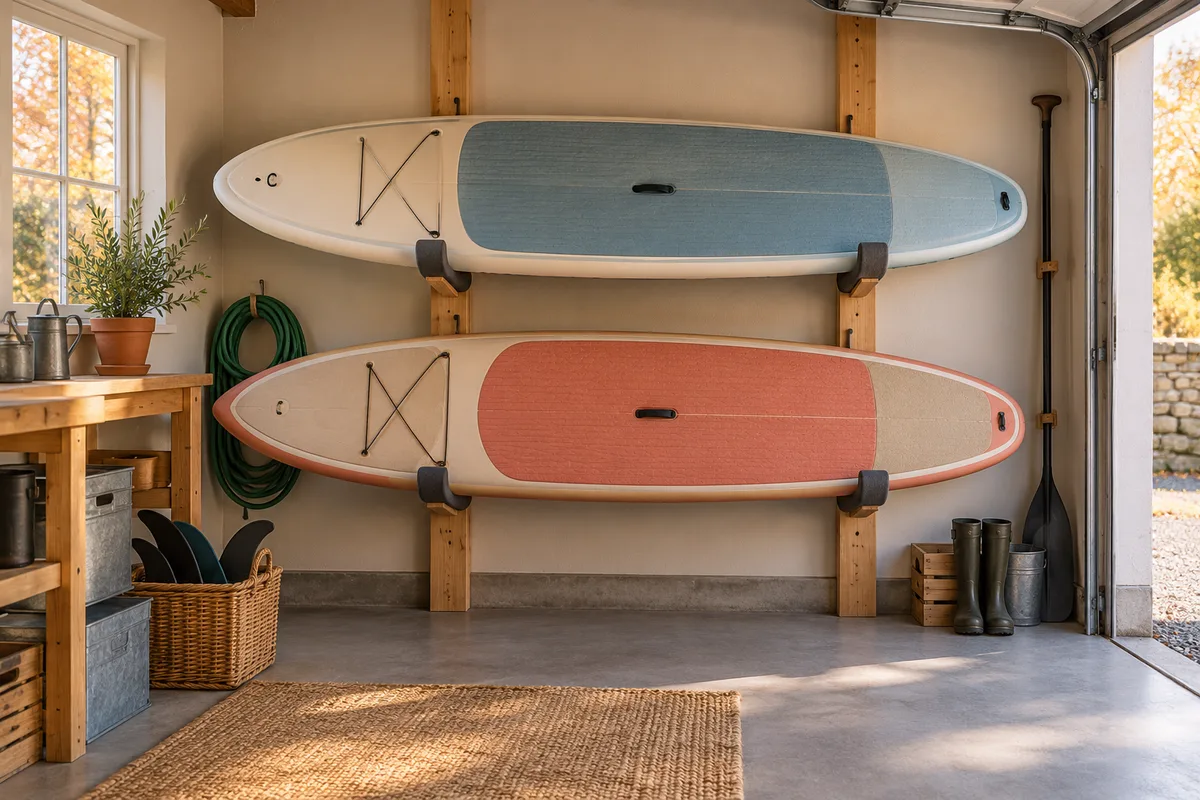
Prepare for a quieter season with maker-led cleaning, drying and storage choices that account for damp and pests. Red’s winter article recommends deflating and loosely rolling its board; its FAQ says reduce pressure below 15 psi for longer storage. Check the instructions for your exact SUP model; guidance differs between makers.
Work through the practical choices
Rinse off salt, sand and dirt as your manufacturer recommends. Dry the board, bag, paddle, pump and leash completely before packing. Check folds, seams, valve and fin areas for trapped moisture. Do not rush a damp board into a closed pack because the season has changed. Air accessories separately.
Choose deflated or inflated storage only according to the exact board instructions. Red’s advice is not a general rule for another maker. Store in a dry, ventilated area away from prolonged sun, heaters and leaks. Keep clutter and food away from the storage area; if using a container to deter pests, ensure the board is fully dry and not compressed. Check periodically for damp and rodent activity.
Related guides: start with the storage chooser, inflatable board care, garage storage.
Review the location during the break
Put a reminder in your own calendar to inspect the stored board and its surroundings. Look for damp, leaks, pests, disturbed supports or other changes in the room. This is a check of the storage arrangement, not a claim that a particular temperature or humidity suits every board.
Keep your model’s manual and a list of packed accessories with the storage record. If you move house, change racks or find that conditions have changed, repeat the location check. On return to use, unpack and inspect the board and components before making plans for the first outing.
Sources & further reading
Manufacturer guidance checked 2026-10-25. Check the instructions for your exact board and model before acting.